The Future of Water Purification: Comparing Standard Reverse Osmosis to Energy-Efficient Forward Osmosis
The Energy Challenge in Water Purification
The global challenge of water scarcity is accelerating the need for advanced purification technologies.
As populations grow and industrial demands surge, securing access to high purity water is no longer a luxury it is an economic and environmental imperative.
For decades, Reverse Osmosis (RO) has been the cornerstone of high purity water production, reliably removing dissolved solids, salts, and even pathogens.
However, this gold standard comes with a significant and unsustainable trade off: extremely high pressure requirements. These large, high pressure pumps drive substantial water purification energy consumption, placing a heavy burden on utility costs and environmental goals.
Fortunately, the future is arriving in the form of Forward Osmosis (FO). This low energy, highly efficient alternative utilizes a natural process to achieve superior separation, particularly in challenging environments.
This comprehensive article will break down the fundamentals of standard RO, explain the breakthrough mechanism of FO, and provide a critical comparison of their RO system efficiency to help your organization future-proof its water treatment infrastructure.
How Reverse Osmosis Works
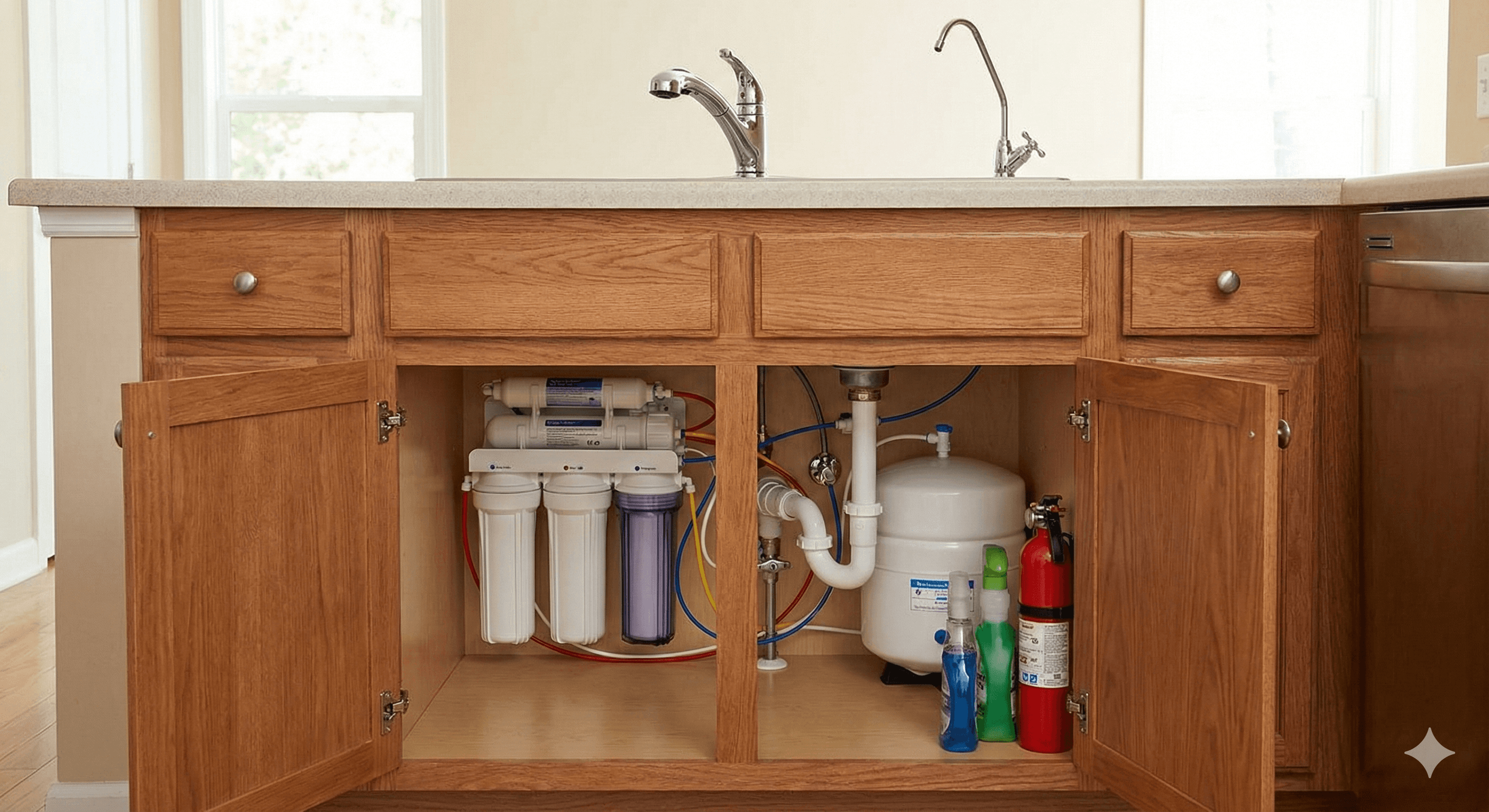
Reverse Osmosis operates on a simple, yet force-intensive principle. In nature, osmosis moves water from a low concentration (pure) side to a high concentration (saltier) side across a semi permeable membrane. RO reverses this flow by applying high mechanical pressure often hundreds of pounds per square inch (psi) to the concentrated side. This pressure overcomes the natural osmotic pressure, literally forcing pure water molecules through the membrane while rejecting the vast majority of dissolved solids, salts, heavy metals, and most contaminants in water.
Due to the delicate nature of the RO membranes and their susceptibility to fouling, robust pre-treatment is non-negotiable. This often involves multiple stages, including advanced systems like sand filtration or chemical softening, to remove suspended solids, colloids, and potential scaling agents. Failing to properly pre-treat the feed water drastically shortens the
membrane lifespan and necessitates costly replacements and higher maintenance cycles.
For a deep dive into pre-filtration, read our guide on Sand Filtration.
The primary limitation of RO is the massive water purification energy consumption.
The sheer force required to continuously overcome osmotic pressure translates into high operational expenditures (OPEX). Furthermore, RO systems produce a significant volume of highly concentrated reject water (brine), which can range from 20% to 50% of the feed volume depending on the source water. Disposing of this wastewater, while achieving acceptable RO system efficiency and water recovery rates, represents a persistent economic and logistical challenge.
The Breakthrough Technology: Defining Forward Osmosis
Forward Osmosis: The Future of Low-Energy Water Purification
Unlike RO, Forward Osmosis (FO) embraces the natural phenomenon of osmosis, operating with minimal or no hydraulic pressure.
The FO process uses a semi-permeable membrane to separate the feed water (the contaminated source) from a highly concentrated solution known
as the "draw solution." This draw solution is intentionally engineered to have an extremely high osmotic pressure. The resulting concentration gradient naturally and continuously "pulls" water molecules from the feed side across the semi-permeable membrane into the draw solution, leaving the contaminants in water behind.
The FO process produces a diluted draw solution, not purified water directly. Therefore, a subsequent, low-energy step is required to separate the purified water from the now-diluted draw solute (which is then recycled). This second step is where the overall energy cost is incurred, but the required energy input is typically far less than the massive, continuous energy required by RO's high-pressure pumps.
Key Advantages of Forward Osmosis
1. Drastically Lower Energy Consumption: By relying on the concentration gradient rather than mechanical pressure for the primary separation, the system achieves a massive reduction in the overall water purification energy consumption required per volume of water treated.
2. Reduced Membrane Fouling: Operating at low pressure minimizes the compaction and deposition of solids onto the membrane surface. This crucial benefit allows FO membranes to handle heavily fouled or high TDS feed waters, like raw sewage or complex industrial wastewater treatment streams, with far greater resilience than RO. This low-fouling characteristic extends membrane life and stabilizes RO system efficiency metrics across challenging feed types.
3. Higher Recovery Rates: Because FO can effectively handle highly contaminated and high-salinity source water, it facilitates higher water recovery rates, significantly reducing the volume of brine or reject water produced. This is a massive step forward in sustainable membrane filtration.
RO System Efficiency vs. Forward Osmosis
Comparing RO System Efficiency and FO Performance
Choosing the optimal water treatment technology requires a clear, objective comparison of operational metrics. While RO and FO both utilize semi permeable membranes, their fundamental driving forces lead to vastly different cost, maintenance, and performance profiles. The most glaring difference is the force required. RO demands large, energy intensive pumps to create the necessary mechanical pressure. FO, conversely, relies on the innate power of chemical potential (the osmotic gradient), making it inherently less mechanically demanding and more stable.
The high energy used by RO is directly linked to the high risk of fouling. High pressure compresses the foulants (like organic matter and silt) onto the membrane surface, quickly degrading performance and forcing frequent, chemical-intensive cleaning cycles. FO's low-pressure operation naturally mitigates this, dramatically reducing downtime and chemical usage. This superior resistance to fouling is key to achieving consistent RO system efficiency in real-world scenarios, particularly with challenging feed water sources.
Both technologies deliver excellent filtrate quality. However, the RO system produces potable water immediately, whereas the FO system produces a diluted draw solution that must undergo a second, thermal or low-pressure separation step to yield pure water and regenerate the draw solution. While this added step adds a modest energy requirement to the FO process, the total energy consumed remains substantially lower than the continuous high-pressure pumping of RO, especially when treating high-salinity water.
Feature | Standard Reverse Osmosis (RO) | Forward Osmosis (FO) Winner (Contextual) | |
Driving Force | High Mechanical Pressure | Natural Osmotic Pressure | FO (Lower Energy) |
Energy Use | High | Low to Moderate | FO |
Membrane Fouling | High Risk | Low Risk | FO |
Water Recovery Rate | Moderate (Difficult with high TDS) | High (Excellent with challenging feeds) | FO |
Filtrate Quality | Excellent | Excellent (But requires Draw Solution recovery) | TBD (Depends on final application) |
Where Does Forward Osmosis Shine? New Applications for Water Treatment
FO has become indispensable for industrial wastewater treatment. Traditional RO systems struggle to treat water with high concentrations of suspended solids, oils, or complex organic compounds that quickly ruin membranes. FO’s low fouling, high-tolerance nature makes it superior for reclaiming water from difficult industrial streams, reducing discharge volumes, and capturing valuable resources.
Perhaps the most immediate application is in improving existing desalination plants. By deploying FO as a pre filter before the high pressure RO stage, the feed water's salinity is reduced, which, in turn, significantly lowers the osmotic pressure. This "pre treatment" strategy
minimizes the pressure needed for the final RO process, boosting overall RO system efficiency and drastically cutting water purification energy consumption. The robustness and relative simplicity of FO make it an ideal candidate for mobile or emergency water purification units. Without the need for massive, complex high-pressure pump skids, FO systems can be more compact and decentralized, offering rapid deployment for humanitarian aid or remote site operations, proving the flexibility of modern membrane filtration.
Next Steps for Your System Assessment
The shift toward sustainable and highly efficient water purification is accelerating, but the choice between Reverse Osmosis and Forward Osmosis depends entirely on your unique operational profile, source water quality, and economic goals. We specialize in the custom engineering and integration of advanced membrane filtration technologies.
We don’t push a single solution; we design the optimal system, whether it’s a high-efficiency RO upgrade or a groundbreaking FO deployment. We invite you to schedule a professional water quality assessment and system audit. Let us help you determine which technology delivers the highest water recovery and the greatest return on investment for your sustainable future.
Conclusion and FAQ
The challenges of global water access and water purification energy consumption demand innovation. Forward Osmosis presents a clear, sustainable path forward by embracing natural processes, offering superior membrane resilience, and dramatically improving overall RO system efficiency metrics when integrated correctly. The future of high-purity water is sustainable, low-energy, and lies in intelligent membrane filtration design.
FAQ
Q: Is Forward Osmosis cheaper than RO? A: While the initial capital expenditure (CapEx) for FO systems can be comparable or slightly higher than RO, the operating expenditure (OpEx) is typically lower over the long term due to reduced energy use, less membrane fouling, and fewer chemical cleaning cycles.
Q: Can FO systems handle industrial contaminants in water? A: Yes, FO is particularly effective at treating complex industrial wastewater treatment streams that contain high concentrations of suspended solids, oils, or organic compounds that would quickly destroy a traditional RO membrane.
Q: How often does an RO system need maintenance? A: Maintenance frequency for an RO system varies, but standard systems require chemical cleaning and potential filter replacement every 3 to 12 months, depending heavily on the quality of the incoming feed water and the success of the pre-treatment stage.