Reverse osmosis water filteration
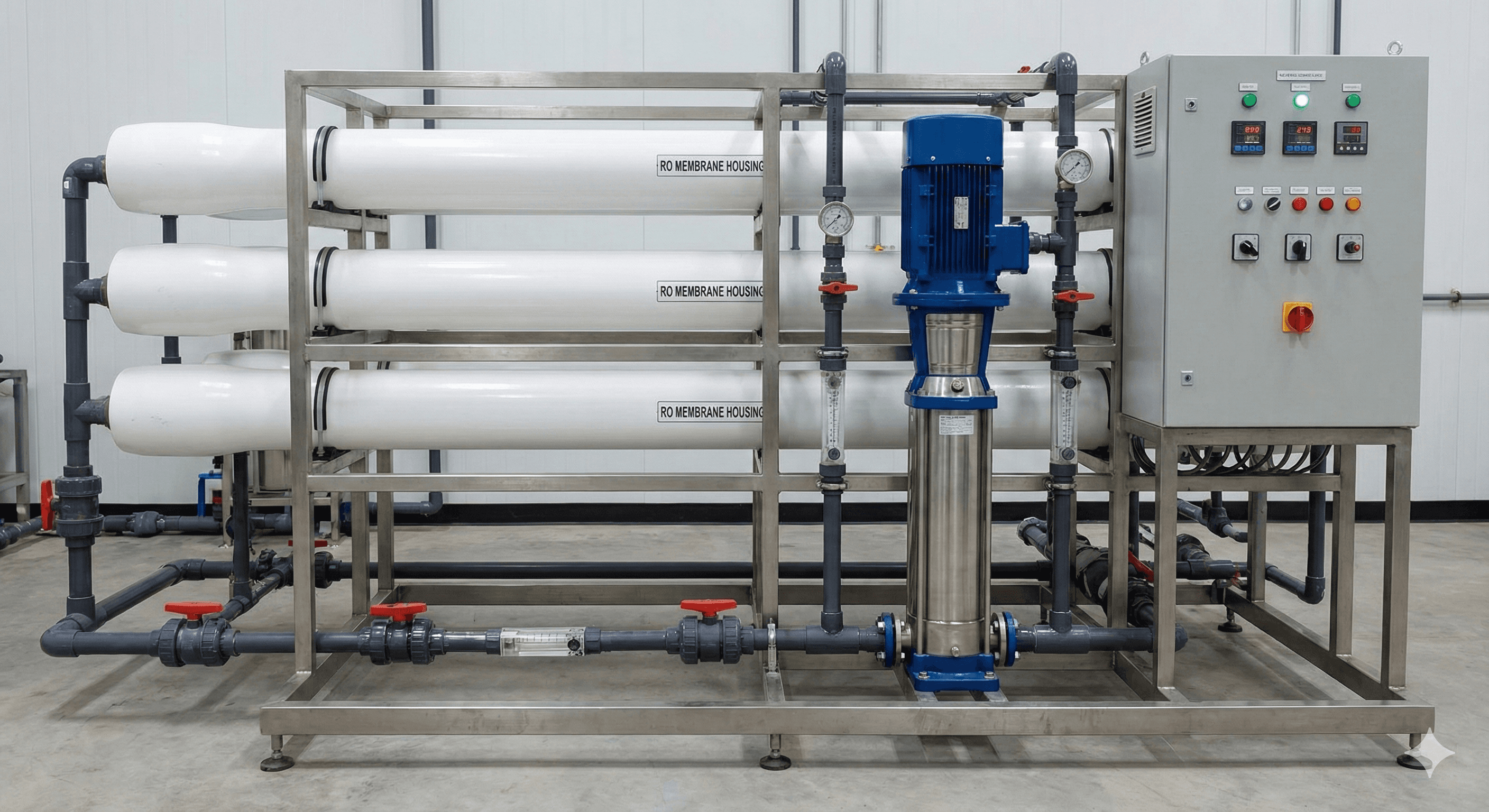
Reverse Osmosis (RO) water treatment systems are widely used in industries, commercial water plants, laboratories, and municipal purification projects. The image above shows a fully assembled industrial grade RO unit equipped with membrane housings, boost pump, control panel, valves, gauges, and stainless steel framing.
This article explains the components, how the system works, its benefits and limitations, and the best practices for long term maintenance.
What Is a Reverse Osmosis Water Treatment System?
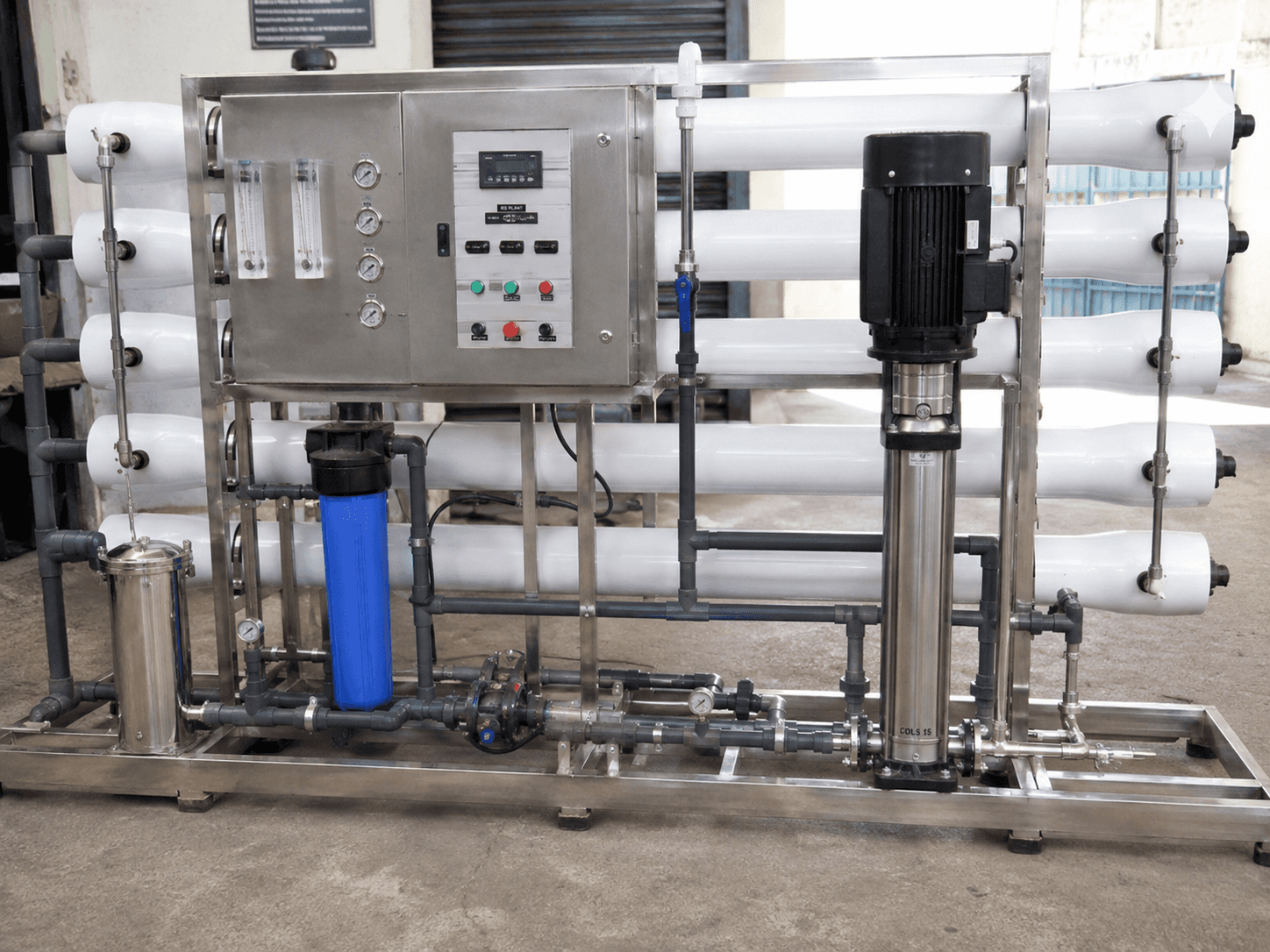
A reverse osmosis system is a purification machine that removes dissolved salts, chemicals, microorganisms, and contaminants from water using a semipermeable membrane. It works by pushing water through the membrane under high pressure, allowing pure water (permeate) to pass while rejecting impurities (concentrate/brine).
Industrial RO systems like the one shown are used for:
Bottled water production
Borehole and surface water treatment
Food & beverage processing
Laboratory and pharmaceutical water
Commercial buildings and estates
Agriculture and irrigation
Key Components of the RO System (Based on the Image)
1. RO Membrane Housings
The long white cylindrical tubes labeled “RO Membrane Housing” contain the RO membranes.
They are responsible for filtering dissolved salts, minerals, heavy metals, and microorganisms.
2. High-Pressure Pump (Blue Vertical Pump)
This stainless steel multistage high pressure pump increases water pressure high enough to force it through the RO membranes. It is the “heart” of the system.
3. Control Panel
The electrical control cabinet includes:
Digital TDS/salinity meters
Pressure indicators
Start/Stop buttons
Safety alarms
Emergency shut off
Pump control switches
The panel automates system operation and protects components from damage.
4. Stainless Steel Frame
A strong, corrosion resistant frame holds the entire machine, ensuring durability and stability.
5. Pressure Gauges
These gauges monitor inlet, outlet, and operating pressure to ensure the system runs within safe limits.
6. PVC Piping & Valves
The pipes and red handled valves control the direction of water flow, flushing, and cleaning operations.
7. Flow Meters
Glass flow meters help monitor permeate (clean water) and reject (wastewater) flow rates.
How the RO System Works (Step by Step Process)
1. Pretreatment Stage
Raw water passes through sediment filters, carbon filters, and softeners (not pictured but usually installed before the RO unit) to remove particles, chlorine, and hardness.
2. High-Pressure Pump Boosting
The high pressure pump increases water pressure to the level required for RO filtration typically 8–20 bar depending on the system.
3. Membrane Filtration
Pressurized water enters the membrane housings.
Inside the RO membranes:
Pure water (permeate) passes through the membrane.
Contaminants are rejected and discharged as brine (waste).
4. Post-Treatment
The clean permeate may go through UV sterilizers, mineralizers, or storage tanks before distribution.
5. System Monitoring and Control
The control panel ensures:
Correct operating pressure
Stable electrical operation
Automatic shutdowns for safety
Real-time water quality monitoring
Advantages of Using an Industrial RO Water Treatment System
1. High Water Purity
Removes:
95–99% dissolved salts
Heavy metals
Bacteria & viruses
Chemicals & pesticides
2. Cost-Effective for Large Operations
Once installed, RO systems reduce chemical usage and operational costs.
3. Provides Consistent Water Quality
Ideal for industries requiring stable and reliable purified water.
4. Energy Efficient
Uses less energy compared to distillation or thermal methods.
5. Fully Automated
Minimizes manual intervention and reduces operator error.
Disadvantages of Reverse Osmosis Systems
1. High Initial Cost
Commercial RO units have a significant upfront investment.
2. Requires Skilled Maintenance
Membranes and pumps need technical expertise for servicing.
3. Produces Wastewater
A portion of water is rejected as brine.
4. Sensitive to Poor Pretreatment
Inadequate filtration can cause membrane fouling or damage.
How to Maintain an Industrial RO System
Proper maintenance is essential for extending lifespan and ensuring efficient performance.
1. Regular Membrane Cleaning
Clean membranes when:
Flow rate drops
Pressure increases
Water quality declines
2. Replace Cartridges and Filters
Sediment and carbon filters must be replaced periodically to prevent membrane damage.
3. Monitor Pressures and Flow Rates
Abnormal readings may indicate blockage, scaling, or pump issues.
4. Schedule Chemical Cleaning
Use approved RO cleaning chemicals to remove scale, organic matter, or biofouling.
5. Inspect and Service the High-Pressure Pump
Lubricate and check pump seals, bearings, and motor performance.
6. Check Piping and Valves
Ensure no leaks, cracks, or worn out seals.
7. Keep Electrical Panel Dry and Secure
Avoid moisture exposure to prevent short circuits.
8. Sanitize the System Periodically
Helps prevent bacterial growth within the membranes and tanks.
Conclusion
Reverse Osmosis systems like the one shown in the image play a crucial role in modern water purification. With advanced membrane housings, high pressure pumping systems, and automated controls, they deliver high quality water for industrial, commercial, and domestic use.
By understanding the components, working principles, advantages, limitations, and maintenance practices, users can maximize system efficiency, reduce operating costs, and ensure long term reliability.